Educational Platform
This digital platform with an interactive interface serves as the primary online hub for teachers,
granting them access to a comprehensive library of resources. This resource bank ensures teachers
have access to relevant and up-to-date materials that can be used to improve their teaching
methods. The interactive interface helps teachers quickly find and apply materials in their
classrooms, allowing them to focus more on supporting their student’s needs.
Choose a special educational need you would like to learn more about.
Dyspraxia
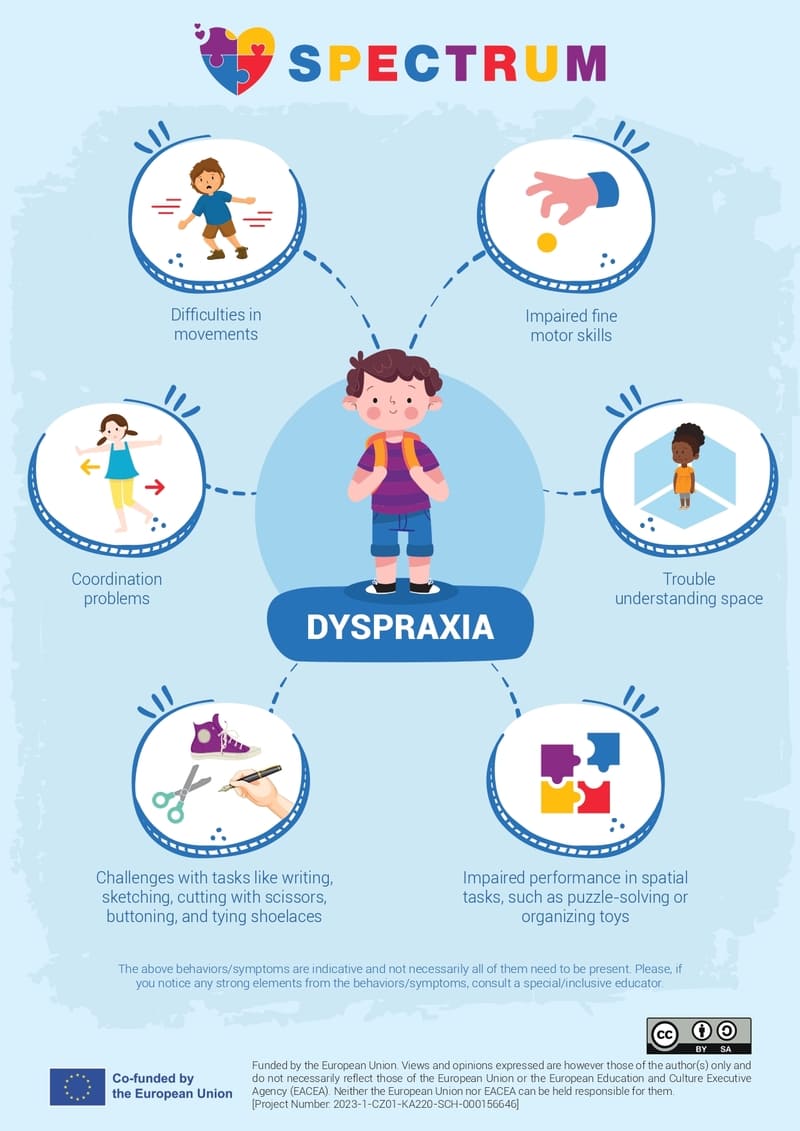
Dyspraxia is a developmental disorder that affects a child’s coordination and motor skills.
Children with dyspraxia may have difficulty with tasks that involve balance, movement, and
fine motor skills, like writing, tying shoelaces, or catching a ball. They may also struggle with
organizing their thoughts and completing tasks in sequence. Despite these challenges, their
intelligence is typically unaffected.
Guideline
Best Practice
Activity Sheet
ADHD with Attention Deficit Predominance
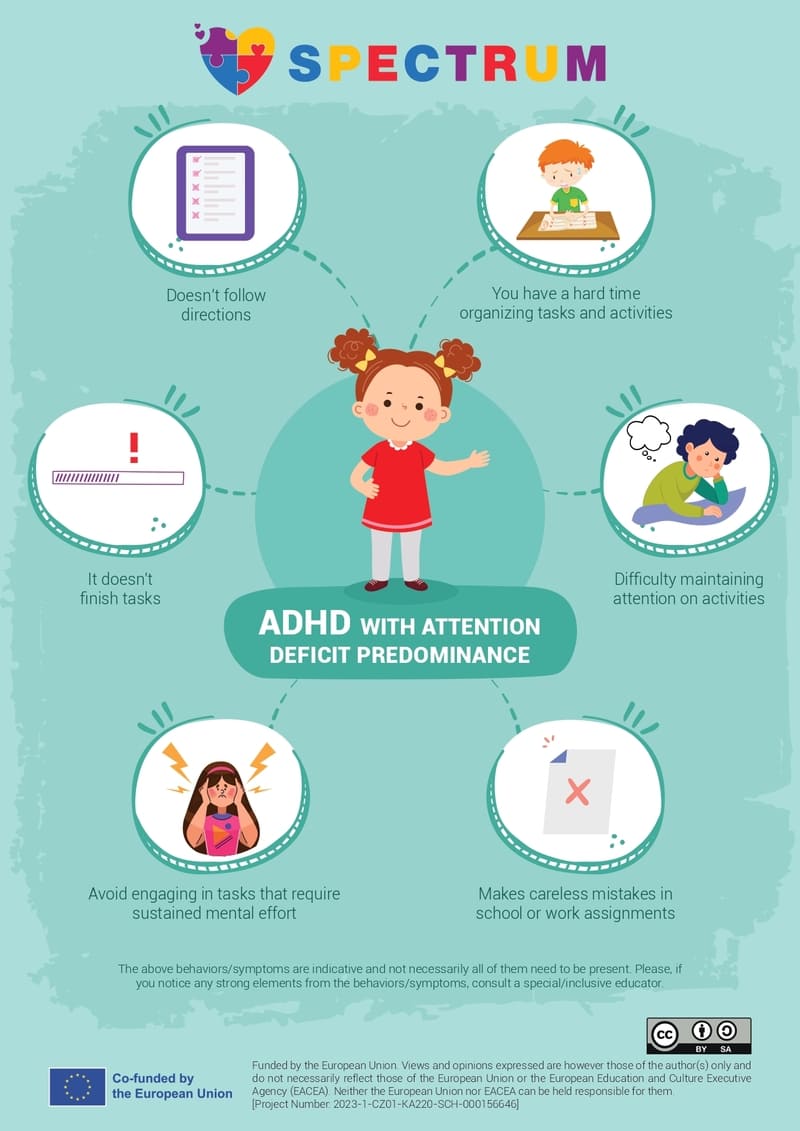
ADHD with attention deficit predominance is characterized mainly by difficulties in
sustaining attention, following through on tasks, and organizing activities. Unlike the
hyperactive-impulsive type, individuals with ADHD-PI are less likely to be disruptive or
hyperactive. Symptoms include frequent daydreaming, distractibility, and forgetfulness.
Early diagnosis and tailored interventions are crucial for effective management.
Guideline
Best Practice
Activity Sheet
Dyslexia – Specific learning disability
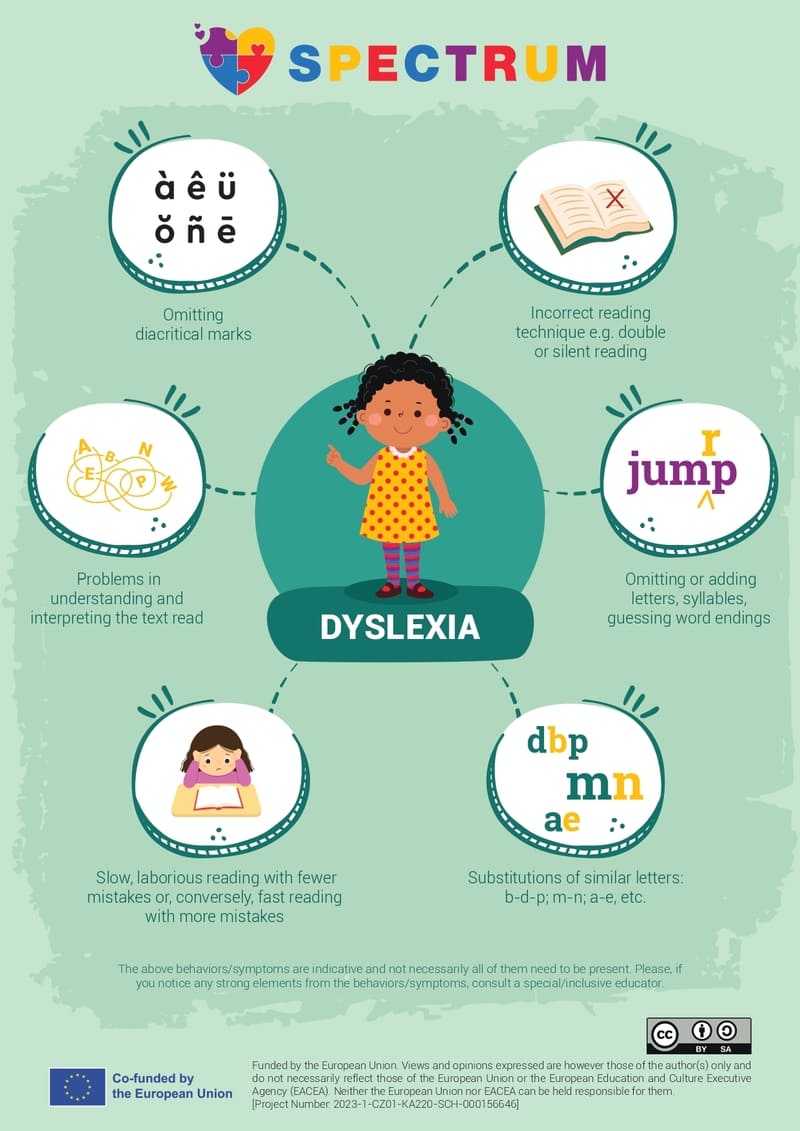
Dyslexia manifests itself in difficulties in reading. Reading is slow, labored, non-fluent, with
fewer mistakes, or, on the contrary, fast, hurried, with increased errors. Children with
dyslexia also have problems with the intonation and melody of sentences (monotonous
reading), and mismanage their breathing. They sometimes repeat the beginning of words,
skip lines and find it difficult to navigate through the text. Typical specific mistakes are made
in reading, leading to misreading and even twisting words.
Guideline
Best Practice
Activity Sheet
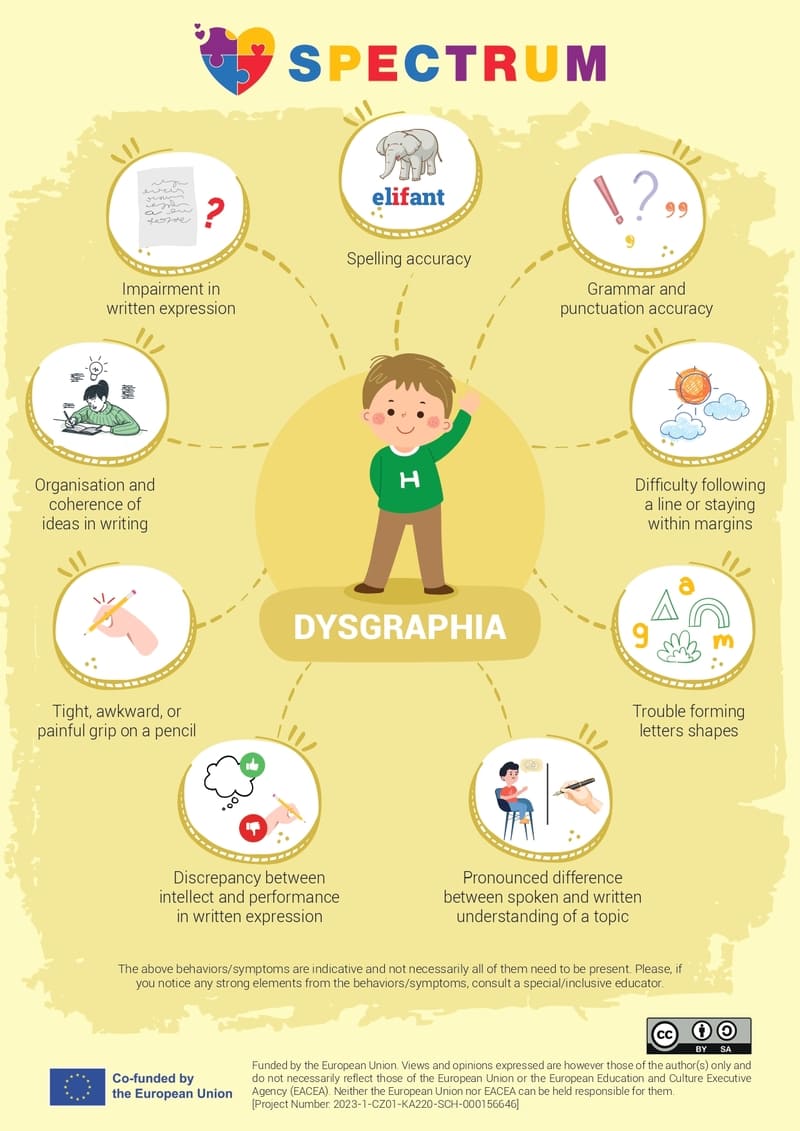
Dysgraphia – Developmental learning disorder with impairment in written expression
Developmental learning disorder with impairment in written expression is characterised by
significant and persistent difficulties in learning academic skills related to writing, such as
spelling accuracy, grammar and punctuation accuracy, and organisation and coherence of
ideas in writing. The individual’s performance in written expression is markedly below what
would be expected for chronological age and level of intellectual functioning and results in
significant impairment in the individual’s academic or occupational functioning.
Developmental learning disorder with impairment in written expression is not due to a
disorder of intellectual development, sensory impairment (vision or hearing), a neurological
or motor disorder, lack of availability of education, lack of proficiency in the language of
academic instruction, or psychosocial adversity.
Guideline
Best Practice
Activity Sheet
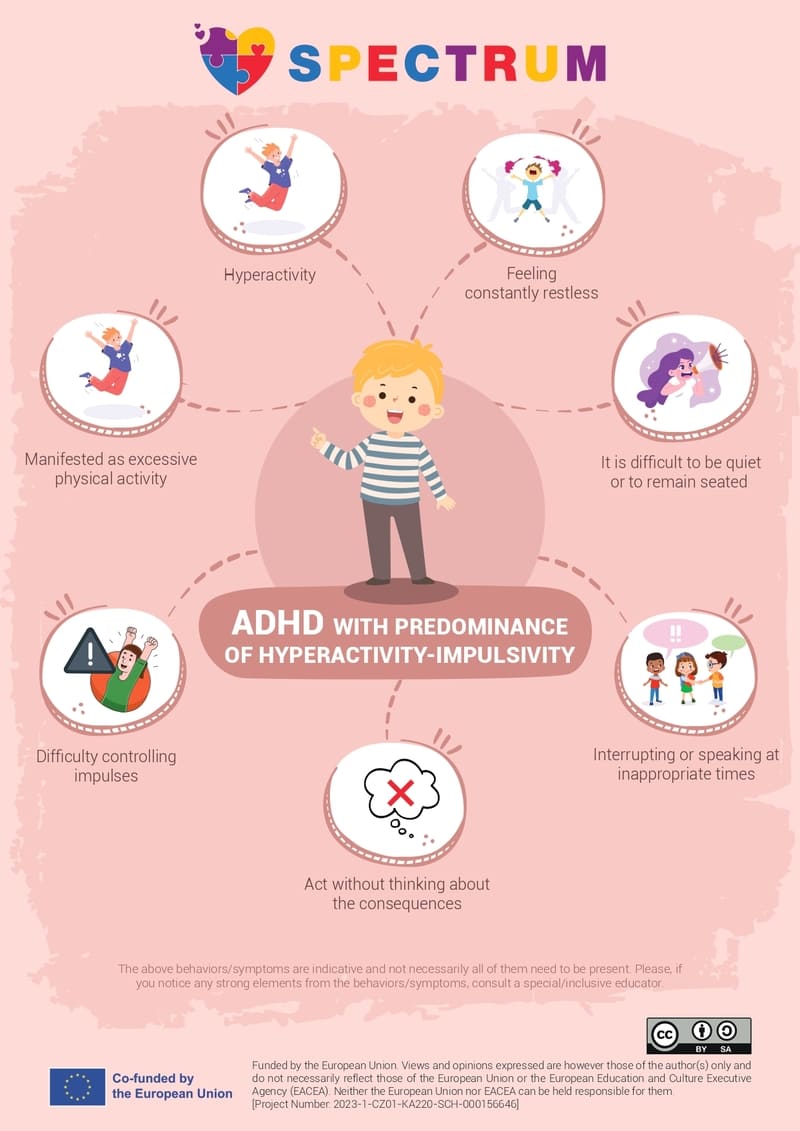
ADHD with Hyperactivity – Impulsivity Predominance
ADHD with hyperactivity-impulsivity predominance, often referred to as ADHD-HI, is
characterized primarily by symptoms of hyperactivity and impulsivity rather than
inattention. Children with ADHD-HI might display behaviours such as constant fidgeting, an
inability to stay seated, excessive talking, and interrupting others. They may act without
thinking, have difficulty waiting their turn, and often seem to be "on the go" or driven by a
motor. Early identification and tailored interventions are essential for managing these
symptoms effectively.
Guideline
Best Practice
Activity Sheet
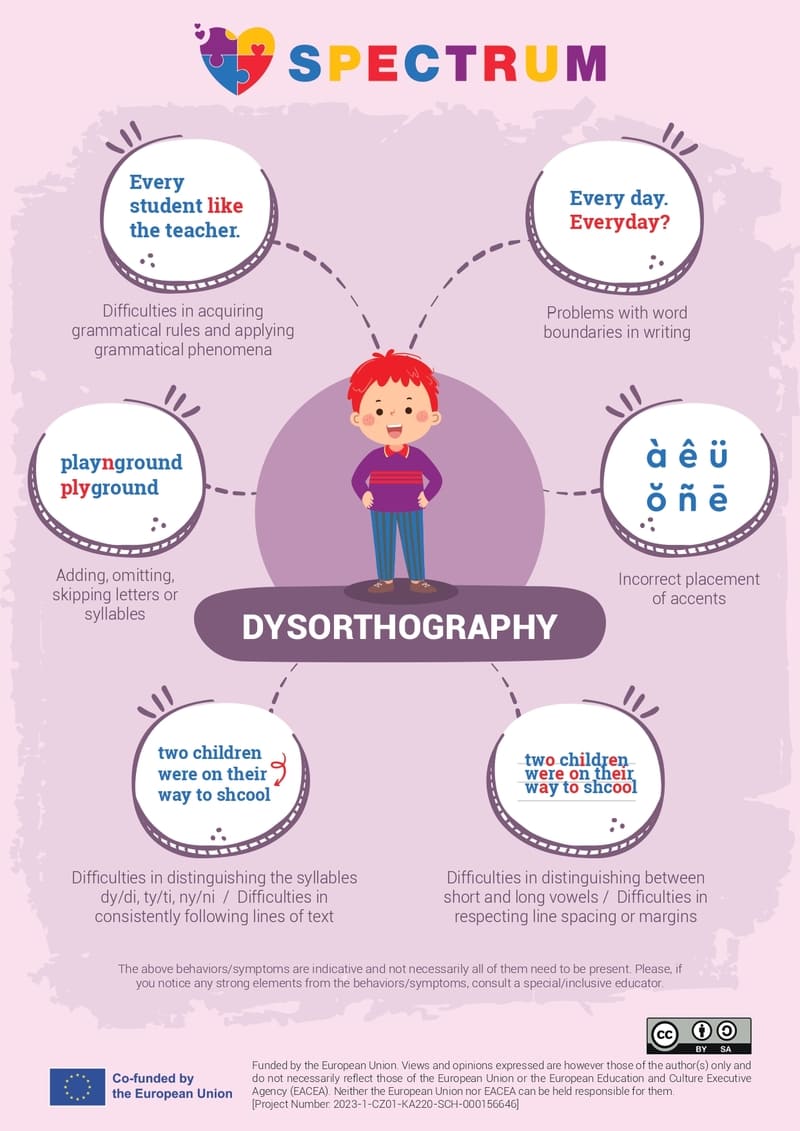
Dysortographia – Disorder of spelling
Dysorthography is a specific spelling disorder, manifested primarily in the area of grammar.
However, it does not include the whole grammar but mainly refers to specific
dysorthographic phenomena, such as adding or omitting letters or syllables, not managing
word boundaries in writing, etc. It also includes the issue of inappropriate application of
grammatical phenomena in dictations. The text of a pupil with dysorthographia is full of
various errors and inaccuracies which are committed repeatedly and are in no way related to
his or her intellectual abilities. Dysortographia is often associated with dyslexia.
Guideline
Best Practice
Activity Sheet
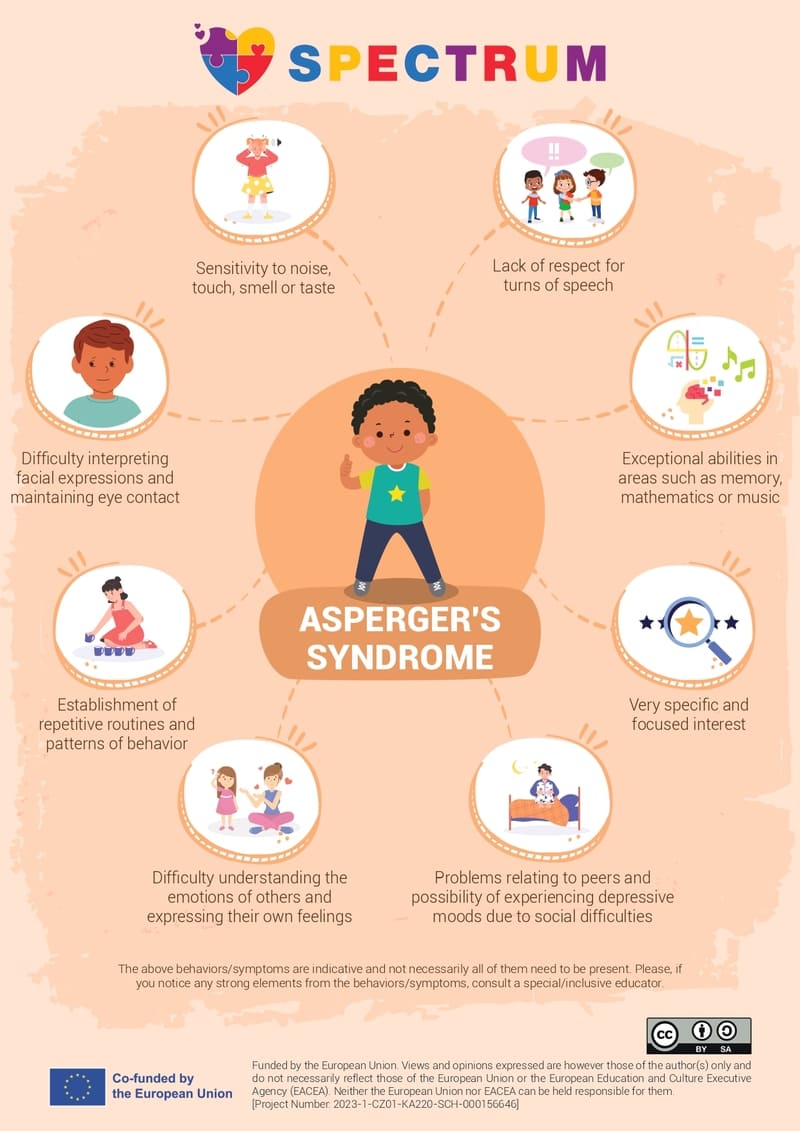
Asperger’s Syndrome
Asperger’s syndrome is a developmental disorder that falls within the autistic spectrum and
affects reciprocal social interaction, verbal and non-verbal communication, a resistance to
accepting change, inflexibility of thought as well as possessing narrow and absorbing fields
of interest. Children with this syndrome are generally extremely good at memory skills (facts,
figures, dates, times, etc.) and many excel in mathematics and science. There is a range in
the severity of symptoms within the syndrome, the very mildly affected child often goes
undiagnosed and may just seem odd or eccentric.
Guideline
Best Practice
Activity Sheet
Autism – Without Disorder of Intellectual Impairment
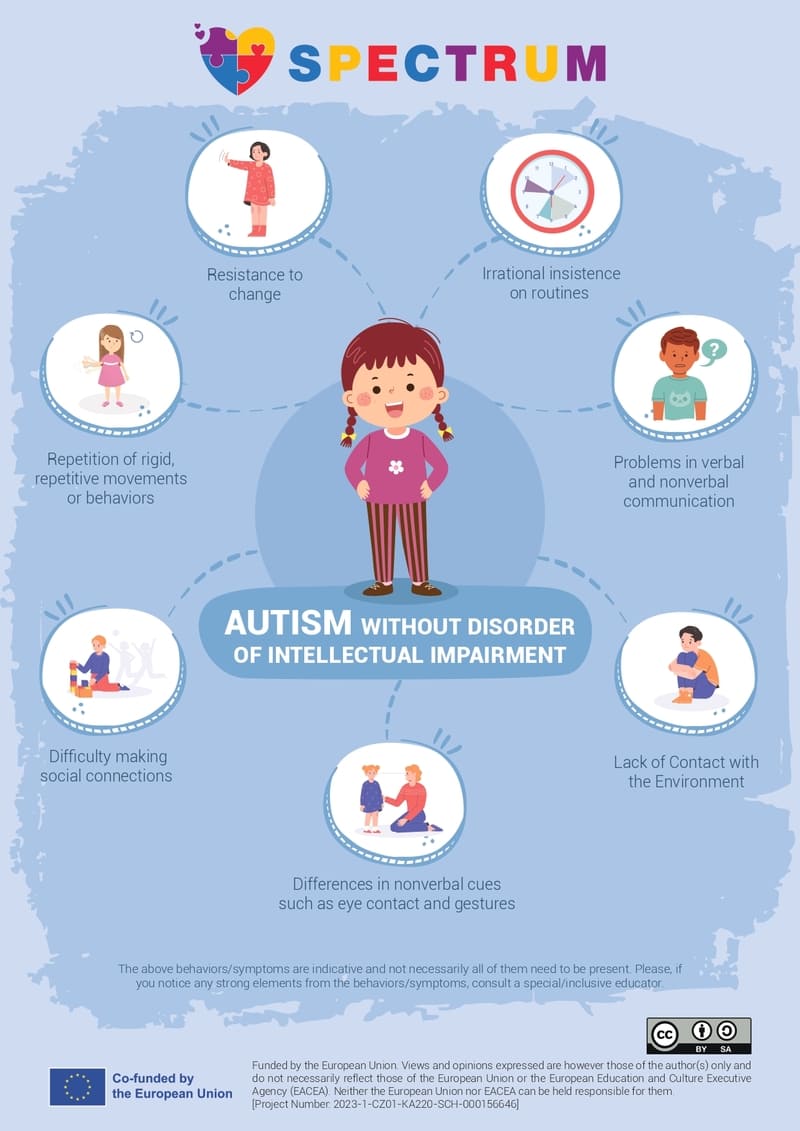
Autism without intellectual disability refers to children who are on the autistic spectrum
and have a cognitive level within the typical range or above. They may have normal or even
outstanding intellectual abilities but face specific challenges in areas such as social
communication, interaction with others, and behavioural flexibility. They may have difficulty
understanding and using language in social contexts, picking up on non-verbal language or
interpreting tone of voice. They often have intense and specialised interests. These interests
can be an educational asset if they are integrated into learning. Many individuals with autism
have sensory sensitivities to loud noises, bright lights, and certain textures.
Guideline
Best Practice
Activity Sheet
Dyscalculia
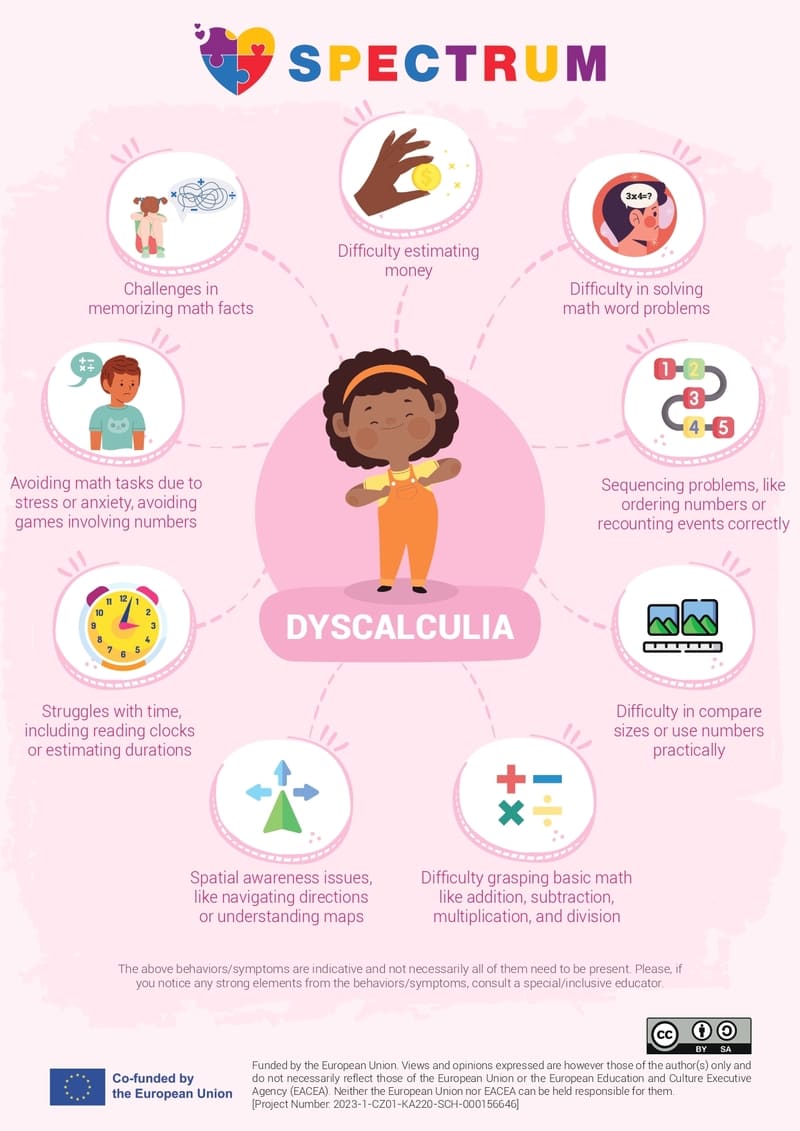
Dyscalculia is a learning difficulty that makes it hard for children to understand numbers and
do math. Kids with dyscalculia may struggle with counting, adding, or telling how much
something is. Even though they might be good at other things, math can feel confusing and
frustrating for them. This can make everyday tasks, like telling time or sharing toys, more
challenging.
Guideline
Best Practice
Activity Sheet
Students with senses impairments: Visual Impairment
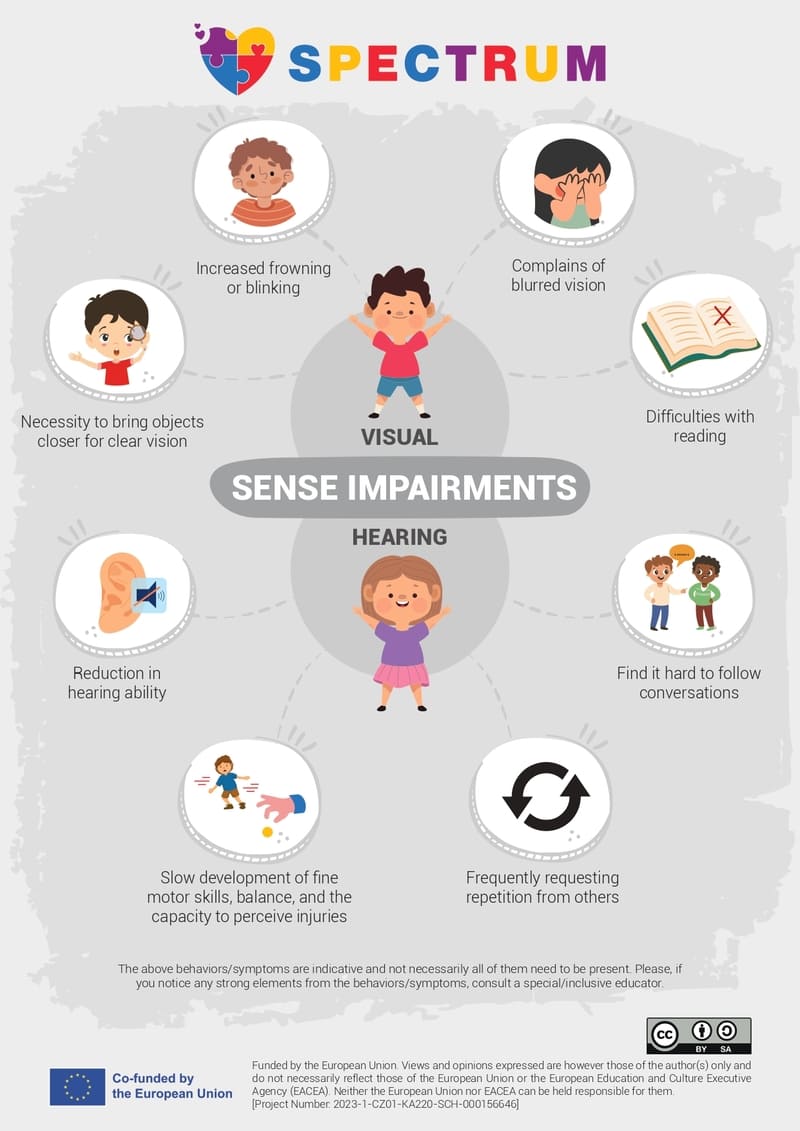
Individuals with visual impairments may face challenges in accessing visual information,
navigating their environment, or participating in activities that require sight. Tailored
interventions and a supportive environment are key to ensuring effective engagement and
inclusion.
Guideline
Best Practice
Activity Sheet
Developmental Language Disorder
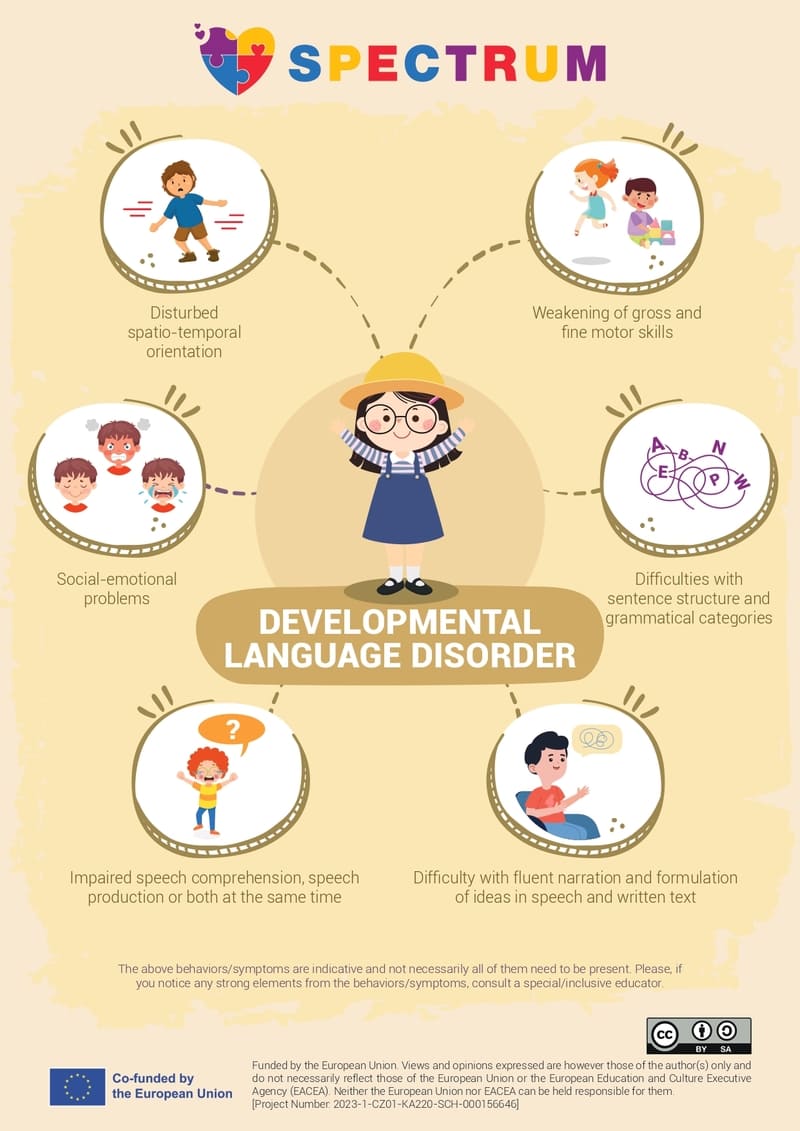
Developmental language disorder is characterized by impaired speech development that is
not a symptom of another diagnosis. It manifests in children whose speech development is
uneven relative to their chronological age and intellectual level, despite having appropriate
conditions for speech development. This is a neurodevelopmental disorder that begins to
show at an early age, marked by deficits in speech comprehension or production, along with
other related difficulties.
Guideline
Best Practice
Activity Sheet
Students with senses impairments: Hearing Impairment
People with hearing impairments may experience difficulties in processing auditory
information, particularly in environments with background noise or when relying solely on
verbal instructions. Simple modifications and inclusive practices help improve
communication and understanding.
Guideline
Best Practice
Activity Sheet
All Guidelines
All Best Practices
All Activity Sheets